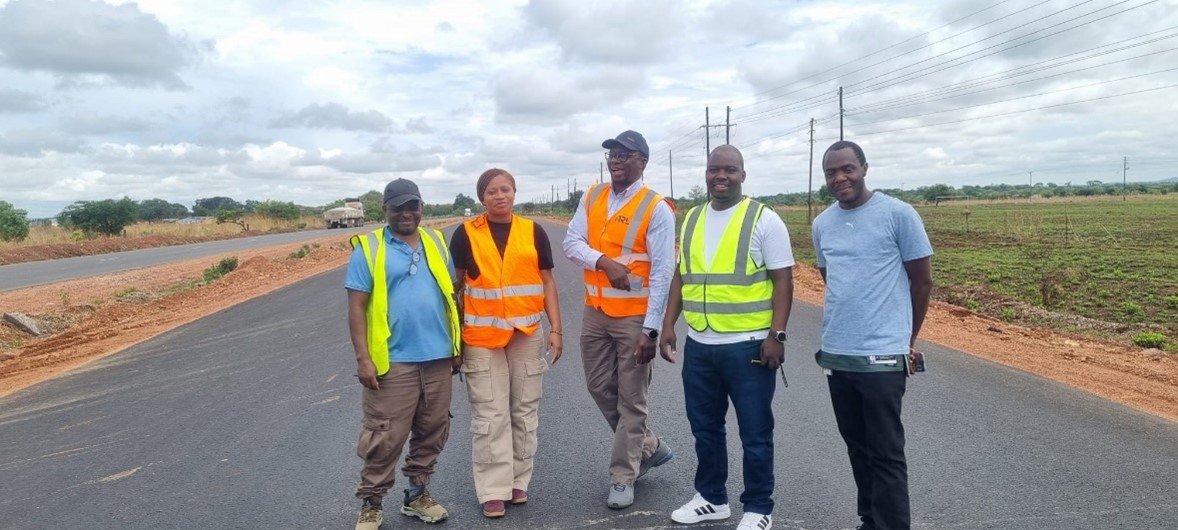
TRL’s work is very much a team effort, and this project is no exception. In addition to my own time in-country, my colleagues Kenneth Mukura, Andrew Otto, Tinashe Nyabunze, Sanaz Bozorg and Anusha Rajasooriya have all spent significant periods working on the ground in Zambia. Their collective expertise, from engineering and road safety to data analysis and project coordination, has been essential in shaping our approach and strengthening our collaboration with the RDA. The insights each colleague has gathered during field visits, technical meetings and stakeholder conversations have enriched our understanding of Zambia’s transport challenges and opportunities, ensuring that the solutions we develop are practical, context-appropriate and rooted in local experience.
From our base in Zambia’s capital and largest city Lusaka, to our various field locations, the experience has been both professionally rewarding and deeply inspiring. Our team is here to support Zambia in reviewing and updating standards for Roads in Zambia, many of which were last revised in the 1990s. We will also be producing the first ever Zambian Road Safety Audit Manual, an important milestone for a country that is rapidly modernising its transport infrastructure and striving to make its roads safer and more resilient.
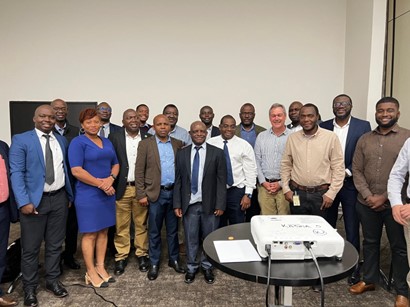
We recently held a stakeholder workshop that brought together engineers, policy makers, civil society organisations, contractors, academics and road safety advocates. The discussions were robust, constructive and, above all, grounded in a shared commitment to improving how roads are designed, built and maintained in Zambia. The workshop, along with our earlier engagements and site visits, has showcased the remarkable energy and collaboration that define this project.
The RDA has long been responsible for the management, maintenance and construction of Zambia’s public roads and bridges. As the transport sector continues to evolve, the Agency has recognised the importance of adopting design standards that truly reflect local conditions. Much of the country’s existing guidance dates back several decades or relies on SATCC (Southern Africa Transport and Communications Commission) regional codes that were developed more than 20 years ago. These older standards simply do not meet the demands of today’s traffic volumes, climate-related stresses, or the growing need to protect vulnerable road users such as pedestrians and cyclists.
Recognising this, Zambia has embarked on a forward-looking journey to modernise its design manuals using a research-based and locally informed approach. TRL has been engaged to help lead this effort, working closely with the RDA and a wide network of stakeholders over the course of a 12-month period, from September 2025 to September 2026. Our task is to review existing manuals, understand the shortcomings that have been observed in recent years, and support the development of new geometric and pavement design standards that are tailored specifically to Zambia’s environment, challenges and ambitions, something TRL has undertaken for countries and transport departments all-round the globe.
A central part of this work is to ensure that the new standards incorporate climate resilience. With increasingly intense rainfall and shifting weather patterns affecting road performance, the ability to design roads that can withstand environmental stresses is no longer optional, it is essential. The project draws heavily on the findings of Zambia’s 2021 study on climate resilient transport infrastructure, which provides crucial data and adaptation guidance that will be embedded into the new manuals.
Road safety is another critical component. As traffic increases, so does the responsibility to ensure that roads are designed with every user in mind. The development of Zambia’s first Road Safety Audit Manual represents an important step toward safer road planning and implementation. During my visit, I was warmly welcomed by the Zambia Road Safety Trust, who emphasised how important this work will be in strengthening national road safety frameworks. Their support and enthusiasm clearly reflect the urgent need for standards that prioritise the well-being of all who travel on Zambia’s roads.
Another vital aspect of this project is the strengthening of quality control and assurance. The new standards will help ensure that designs are implemented correctly and consistently, reducing the likelihood of premature pavement failures and promoting greater durability and value for money across the road network. Long-lasting roads are not just technical achievements, they are catalysts for economic growth, social connection and improved quality of life for communities across the country.
Colleagues and I look forward to sharing more updates soon, it is a privilege to contribute to a project that will shape the future of Zambia’s roads, and I am grateful to everyone who has welcomed and supported us along the way.