By Sanaz Bozorg, Consultant, TRL
I travelled to Zambia recently as part of TRL’s multidisciplinary team supporting Zambia’s Road Development Agency (RDA) in developing a new generation of national road design standards. This work spans several interconnected areas, geometric design, pavement design, geotechnical engineering, environmental considerations and, importantly, road safety. I am part of the team focusing specifically on the safety element of the project, helping to create the country’s first Road Safety Audit Manual.
Zambia is a land-locked country situated in southern Africa, with approximately 22 million inhabitants, it’s a country of growing potential and vibrant communities.
Although I have worked on international projects before, almost all of them were remote. Visiting Zambia in person made an enormous difference. It was my first time in Africa, and the opportunity to experience the country’s roads, communities and transport challenges first-hand made the work more meaningful both personally and professionally.
Road safety engineering has always been a particularly compelling area of work for me. The chance to contribute to Zambia’s first national Road Safety Audit Manual felt both important and overdue Alongside my colleagues Angela Fuller-Dapaah and Anusha Rajasooriya, I have been contributing the road safety engineering input that sits within the broader update of Zambia’s national standards. Together, we are shaping the Road Safety Audit section which puts the protection of human life at the core of every design and decision. A strong audit framework can prevent serious collisions before they happen, and embedding this thinking into Zambia’s standards is work that truly saves lives.
Before arriving in Zambia, to make sure the guidance is both robust and realistic, we reviewed Road Safety Audit manuals from South Africa, PIARC (World Road Association) and the UK, comparing their approaches and identifying what could work best in Zambia’s unique context. This technical comparison helped us understand where international best practice can be adopted directly and where it needs to be adapted to local realities.
Also, I carried out an extensive literature review and reviewed historic Road Safety Audits undertaken in Zambia to identify common design and operational issues appearing at the planning stage to better understand the country's most pressing safety challenges. All these desk-based findings gave us a clearer sense of what guidance Zambia needs, but seeing the roads in person was essential to test whether the evidence matched reality. Comparing these findings with what we observed on the ground was illuminating. The combination of research and field evidence created a clearer picture of how global lessons could be thoughtfully applied within Zambia's road environment. This evidence base has become a foundation for shaping practical, relevant safety recommendations within the new standards.
Our team inspected several corridors, junctions and roadside environments to understand the day-to-day conditions that engineers and road users encounter.
We saw worn pedestrian crossings that ended into areas with no footpaths or safe waiting space, leaving people stepping straight back into live traffic. We also saw barriers of different standards and heights, missing speed controls and areas where vulnerable users were clearly at risk, and more. These on-road observations reinforced the importance of creating a Road Safety Audit Manual that is not just theoretically sound but fully aligned with Zambia’s daily realities.
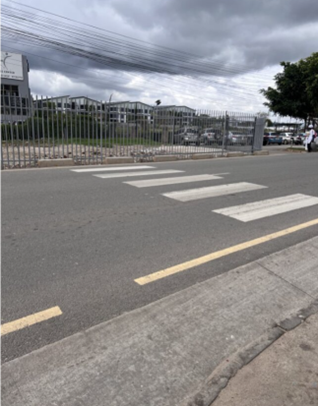
Understanding these challenges first-hand allows us to refine the safety guidance in a way that reflects real operating conditions rather than assumptions.
Throughout the trip, we took part in multiple stakeholder consultations, both during this visit and in earlier sessions. Speaking directly with engineers, planners, contractors and community representatives added enormous value to our work.
Their insights into design challenges, maintenance pressures, resource limitations and local behaviour patterns helped us shape guidance that is practical, realistic and implementable. A national Road Safety Audit Manual can only succeed if the people who use it feel it reflects their experience, and these conversations ensured that the guidance is grounded in daily practice rather than distant theory.
Over the coming months, our team will continue to support the RDA in reviewing and updating the full suite of Zambia’s road design standards, including completing the national Road Safety Audit Manual. A key focus will be ensuring that safety principles are consistent across all documents and fully embedded in geometric design, pavement design and other technical sections.
Our shared goal is simple but powerful: to reduce preventable safety problems and support local engineers in developing safer, more resilient roads for all users. The progress made so far reflects a strong partnership between TRL, RDA and Zambia’s wider transport community, and being part of this journey has been an honour.
TRL supports transports departments, local and national governments across the globe with their road safety research and innovations, to find out how we can support make your road network safer drop us a line at enquiries@trl.co.uk
To read my colleagues Angela Fuller-Dapaah blog on her experience in Zambia click: