Managing pavement and asset information
TRL provides P-AMS, National Highways’ Pavement Asset Management System. Based on TRL Software’s iROADS platform, P-AMS supports the management of pavement information across approximately 7,250 km of motorways and major A-roads.
The system brings together asset inventory, condition, performance and maintenance information. It helps National Highways’ teams access trusted data, understand the condition of the network and support operational and strategic decisions.
P-AMS also provides capabilities for pavement decision support, maintenance planning, works ordering, forecasting and reporting. Its flexible architecture supports integration with other systems and the potential management of multiple asset classes. TRL continues to support the platform through software maintenance, technical assistance, user engagement and the development of new functionality.
Collecting Pavement Condition Data
TRL delivers pavement condition survey programmes across multiple National Highways regions, including intrusive and non-intrusive surveys in the South Region, intrusive surveys in the Midlands Region and non-intrusive surveys in the East Region. Our survey teams work directly on the network, collecting the information needed to support maintenance, renewal and improvement schemes.
As a direct supplier to National Highways, under the Technical Surveys and Testing (TST) Contract, TRL provides an independent source of pavement condition data, giving asset managers, designers and delivery partners a consistent evidence base to support investment and engineering decisions.
Our support includes:
Collection of pavement condition data using specialist survey vehicles, equipment and accredited survey processes.
Non-intrusive pavement surveys, including visual condition surveys (VCS), Ground Penetrating Radar (GPR), Falling Weight Deflectometer (FWD) surveys and Deflectograph (DFG) surveys, providing information on pavement condition, structural capacity and network performance.
Intrusive pavement investigations, including coring, Dynamic Cone Penetrometer (DCP) testing, trial pits and pavement sampling to understand pavement construction, condition and remaining life.
Testing and analysis through TRL's UKAS-accredited laboratory facilities, providing independent assessment of pavement materials and pavement performance.
Provision of pavement condition information to National Highways to support scheme development, maintenance planning and investment decisions.
Acting as Principal Contractor for survey activities, coordinating traffic management, specialist contractors and multiple survey teams to ensure the safe and efficient delivery of works on the network.
By combining field surveys, laboratory testing and pavement engineering expertise, TRL helps National Highways develop a detailed understanding of pavement condition across the Strategic Road Network and provides the information needed to plan and priorities future maintenance and renewal activities.
Monitoring road condition and skid resistance
Reliable road-condition information is essential for maintaining a safe and effective network. TRL provides specialist expertise to help National Highways monitor pavement performance and maintain confidence in the data used to make asset-management decisions.
This includes analysing information from National Highways’ skid-resistance benchmark sites. These sites are surveyed at different points during the annual survey season to help identify seasonal and year-to-year changes in skid resistance.
By examining longer-term patterns and variations, TRL helps National Highways understand whether changes in recorded skid resistance reflect the condition of the road, environmental factors or differences in the survey process. This evidence supports the consistent interpretation of survey results and helps inform decisions about inspection, maintenance and safety interventions.
Assuring the quality of survey equipment and data
National Highways relies on specialist survey vehicles and equipment to assess the condition and safety performance of the Strategic Road Network.
TRL has undertaken national accreditation and verification work for sideway-force skid-resistance survey devices, commonly associated with SCRIM surveys. This involves assessing equipment performance to help ensure different survey machines produce accurate, consistent and comparable results.
TRL’s expertise in reference equipment, survey methodology and data quality helps National Highways and its supply chain maintain confidence in the information collected across the network.
- Pavement condition surveys
- Skid-resistance measurement and analysis
- Road-surface and materials investigations
- Survey-equipment verification
- Data validation and quality assurance
- Development of survey methodologies
- Interpretation of network-condition information
Researching safer roadworks
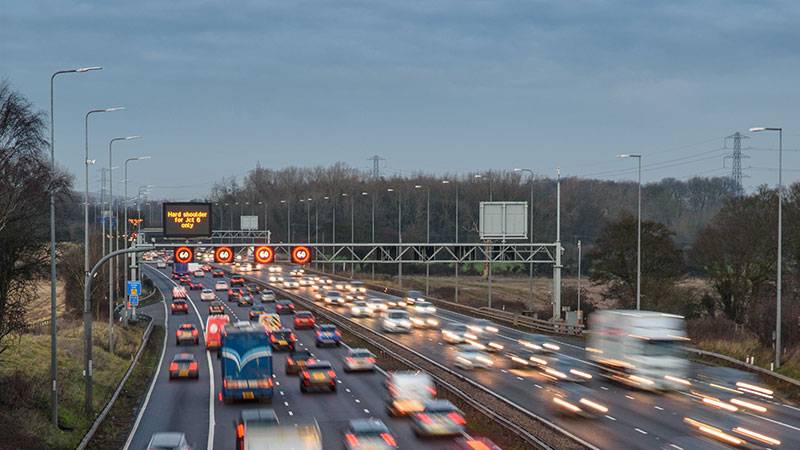
TRL has undertaken research to help National Highways improve the safety and operation of roadworks. This has included examining the evidence for using the highest safe speed through roadworks and considering how different speed limits and roadworks arrangements affect road users, road workers and traffic flow.
TRL combines collision evidence, operational data, behavioural research and practical case studies to assess potential changes. This helps National Highways understand the likely safety and operational consequences before introducing new approaches more widely.
The objective is to support roadworks that protect workers and road users while reducing unnecessary disruption and maintaining public confidence.
Understanding driver behaviour
Infrastructure and technology are most effective when they reflect how people actually behave. TRL’s human-factors and behavioural specialists investigate how drivers understand and respond to road layouts, signs, speed limits, information and new highway technology. This can involve driving-simulator studies, controlled trials, interviews, observational research and analysis of real-world data.
- Identify where road layouts or information may cause confusion
- Understand how drivers respond to changes in the road environment
- Assess the potential effects of new technology
- Design interventions around real road-user behaviour
- Recognise unintended consequences before wider implementation
- Communicate changes more effectively
By putting road users at the centre of research and design, TRL helps translate technical improvements into safer and more usable roads.
Supporting road safety and risk management
TRL provides independent road-safety expertise to help National Highways understand risk and assess the effectiveness of potential interventions.
Our specialists can analyse collision, traffic and operational data to identify patterns, contributing factors and areas of increased risk. This evidence can be combined with engineering assessments, behavioural insights and evaluation techniques to provide a more complete understanding of a safety issue.
- Collision and casualty-data analysis
- Road-safety research
- Risk assessment
- Evaluation of safety interventions
- Safe System expertise
- Human-factors assessment
- Statistical analysis and modelling
- Independent technical review
This multidisciplinary approach helps National Highways move from identifying a problem to understanding its causes and selecting an appropriate response.
Improving pavement materials and performance
TRL has extensive experience in the research, testing and assessment of pavement materials. Our specialists investigate how materials perform under traffic loading, changing weather conditions and different maintenance regimes. This helps infrastructure owners understand how pavement construction and maintenance choices affect durability, safety, cost and environmental performance.
TRL’s laboratory and full-scale testing capabilities can be used to examine conventional and innovative materials before they are introduced more widely. This may include assessing strength, durability, surface performance, deterioration and whole-life implications.
- Understand the performance of new materials
- Compare alternative construction and maintenance approaches
- Reduce the risk associated with innovation
- Improve pavement durability
- Consider whole-life costs
- Explore opportunities to reduce environmental impacts
TRL’s research has also contributed to the development of pavement specifications and maintenance practices used throughout the highways sector.
Developing standards and technical guidance
TRL has a long history of developing the evidence behind highway standards, specifications and guidance. Our research has contributed to areas including pavement design, road materials, skid resistance, asset condition, maintenance, roadworks and road safety.
By combining scientific research with an understanding of real-world network operation, TRL helps turn technical evidence into practical guidance. This supports greater consistency across the industry and gives National Highways, contractors and suppliers a common evidence base for designing, maintaining and operating the network.
TRL can also review existing standards, investigate emerging issues and assess whether requirements remain appropriate as materials, vehicles, technology and road-user behaviour change.
Evaluating innovation and emerging technology
New technology has significant potential to improve the way roads are designed, maintained and operated, but innovation must be supported by robust evidence.
TRL helps National Highways explore and evaluate new technologies, products, survey methods and operational approaches. Our independent role can include designing trials, defining performance measures, analysing results and assessing whether an innovation is safe, effective and suitable for wider deployment.
- Safety
- Technical performance
- Reliability
- Road-user behaviour
- Operational efficiency
- Data quality
- Environmental impact
- Cost and value
- Scalability
- Implementation risks
This gives decision-makers a clearer understanding of both the benefits and limitations of a proposed innovation.
Providing independent evidence for complex decisions
Managing the Strategic Road Network involves decisions that can affect safety, investment, network performance and millions of journeys.
TRL provides independent evidence to help National Highways assess these decisions objectively. Our teams bring together engineering knowledge, scientific research, data analysis and practical experience to investigate complex problems from multiple perspectives.
We can support the complete journey from research question to implementation: defining the problem, gathering evidence, conducting trials, analysing results, developing recommendations and evaluating the impact of subsequent changes.
Embedding suicide prevention across the highways sector
Suicide prevention is a complex public health and safety challenge that affects individuals, families, communities and organisations across the transport sector. Recognising the importance of a coordinated and proactive response, National Highways is working to embed suicide prevention within its activities and encourage greater consistency across the highways industry.
Since 2023, TRL has supported National Highways in developing and implementing a sector-leading suicide prevention programme. The work brings together policy, guidance, engineering, stakeholder engagement, organisational change and performance monitoring to help reduce suicide-related harm across the Strategic Road Network.
Establishing a consistent and proactive approach
Suicide prevention has not traditionally been considered consistently throughout the planning, design and operation of highway infrastructure. Differences in awareness, knowledge and confidence can make it difficult for organisations and individuals to identify risk, discuss the subject appropriately and understand what action they can take.
TRL has worked with National Highways to develop a coordinated package of standards, guidance and strategic activities that embeds suicide prevention more firmly within highways decision-making.
- Developing a new suicide prevention standard within the Design Manual for Roads and Bridges, requiring suicide risk to be considered proactively during highway design and project development
- Producing supporting UK Roads Leadership Group guidance to encourage the consistent application of suicide prevention principles across the wider highways sector
- Supporting the development of National Highways’ Suicide Prevention Plan for the third Road Investment Strategy period
- Identifying opportunities for National Highways to strengthen its leadership role and influence wider industry practice
The new standard has progressed through consultation and approval to help ensure it is practical, proportionate and appropriate for the highways sector. Its planned industry rollout in autumn 2026 will provide a consistent framework for considering suicide risk within highway planning and design.
Accompanying guidance was launched by the UK Roads Leadership Group in September 2025, helping extend the programme’s reach beyond the Strategic Road Network and encourage wider industry adoption.
Turning strategy into long-term change
Developing standards and plans is only one part of creating meaningful change. TRL is continuing to help National Highways translate its suicide prevention ambitions into practical action across the organisation and its supply chain.
- Developing a stakeholder engagement plan to strengthen collaboration between highways, health, local authority and suicide prevention organisations
- Undertaking culture and perception surveys to understand current awareness, confidence and organisational readiness
- Establishing a baseline against which future progress can be evaluated
- Developing a performance-monitoring framework to measure outcomes and support continuous improvement
- Identifying engineering opportunities that could help reduce risk across the Strategic Road Network
- Working with supply-chain partners to explore potential design responses
- Completing a learning needs analysis to identify capability gaps and inform future training and awareness activities
- Supporting the launch and adoption of the new DMRB standard across the sector
This work is helping to build the foundations for lasting change. It gives National Highways a clearer understanding of current capability, a coordinated approach to engagement and a stronger evidence base for measuring progress.
By bringing together research, engineering, organisational insight and cross-sector collaboration, TRL is helping National Highways make suicide prevention a more consistent consideration in the way highway infrastructure is planned, designed and operated.
A partnership built around evidence care and innovation
TRL’s work with National Highways reflects the breadth of expertise and responsibility involved in managing one of the country’s most important infrastructure assets.
From asset-management software and road-condition monitoring to behavioural research, materials testing, safety analysis, suicide prevention and innovation evaluation, TRL helps National Highways understand its network, protect the people who use it and prepare for future challenges.
Our role is to transform complex information into practical evidence, supporting safer roads, better-informed investment and more effective management of the Strategic Road Network.
Discover what TRL can do for your network
TRL helps road authorities, infrastructure owners and transport organisations make better decisions through trusted data, independent research and practical innovation.
Whether you need to improve asset management, investigate a safety challenge, evaluate new technology, assess network condition or understand road-user behaviour, our specialists can help.
Contact enquires@TRL.co.uk to discuss how we can support your infrastructure, safety and innovation priorities.